Endoscopic Discectomy
Removal of the herniated disc fragment pressing on a nerve, through a dime-sized incision, with same-day discharge.
What Endoscopic Discectomy Treats.
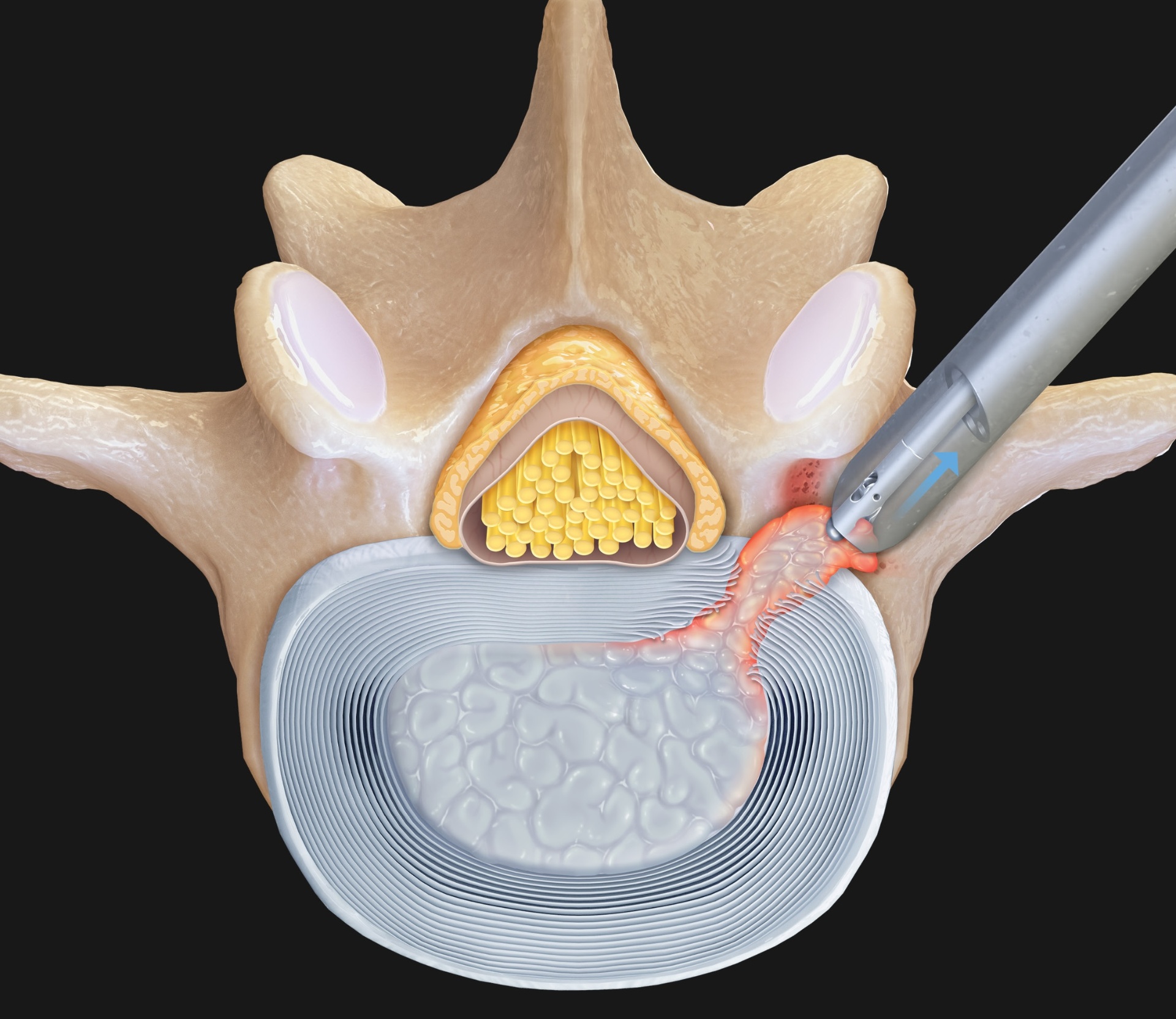
A herniated disc can press on a nerve root and send pain, numbness, or weakness down the leg. This is sciatica. When those symptoms do not settle with time, medication, and therapy, removing the fragment that is compressing the nerve relieves the pressure. Endoscopic discectomy does that, and little else. It is a targeted operation for a specific problem.
Who It Is For.
Endoscopic discectomy suits a herniated disc that matches a specific nerve and a specific pattern of leg symptoms. The imaging and the symptoms have to line up. It treats nerve compression from a disc fragment. It is not a fix for every kind of back pain, and Dr. Hirsch confirms the fit by reviewing your MRI against what you feel.
How the Procedure Works
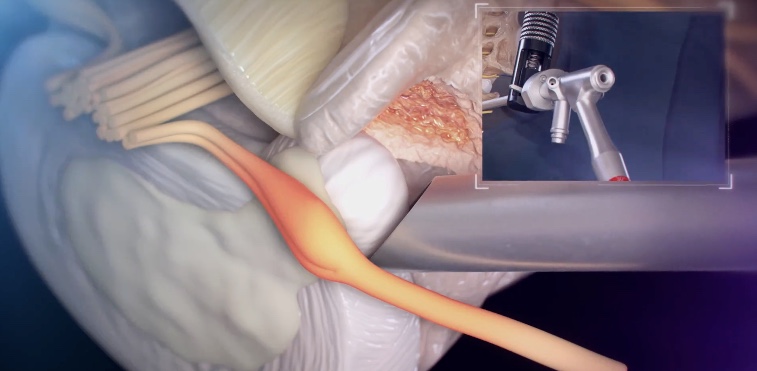
Working through a dime-sized incision, a high-definition endoscope reaches alongside the nerve, and the disc fragment is removed under direct visualization. The muscle and bone around the nerve are left largely undisturbed. Most patients go home the same day. Endoscopic discectomy is one application of endoscopic spine surgery — see the full technique on the endoscopic spine surgery page.
Recovery.
Recovery is faster than open disc surgery, because there is no muscle stripping to heal from. Most patients walk the same day and return to light activity within days. A specific timeline for lifting, sitting, and returning to work or sport follows, based on your job and how active you are.
Endoscopic and Open Microdiscectomy.
Traditional microdiscectomy works, and it remains the right choice for some patients. The endoscopic approach reaches the same disc fragment through a smaller opening, with less disruption to the muscle and bone around it. For a suitable herniated disc, that means less tissue trauma and a quicker recovery. Dr. Hirsch performs both and recommends the one that fits your anatomy.
Dr. Hirsch is board-certified and Yale-trained. Read his full background.