ACDF — Anterior Cervical Discectomy and Fusion
Relief of a pinched cervical nerve or spinal cord compression through a small incision at the front of the neck.
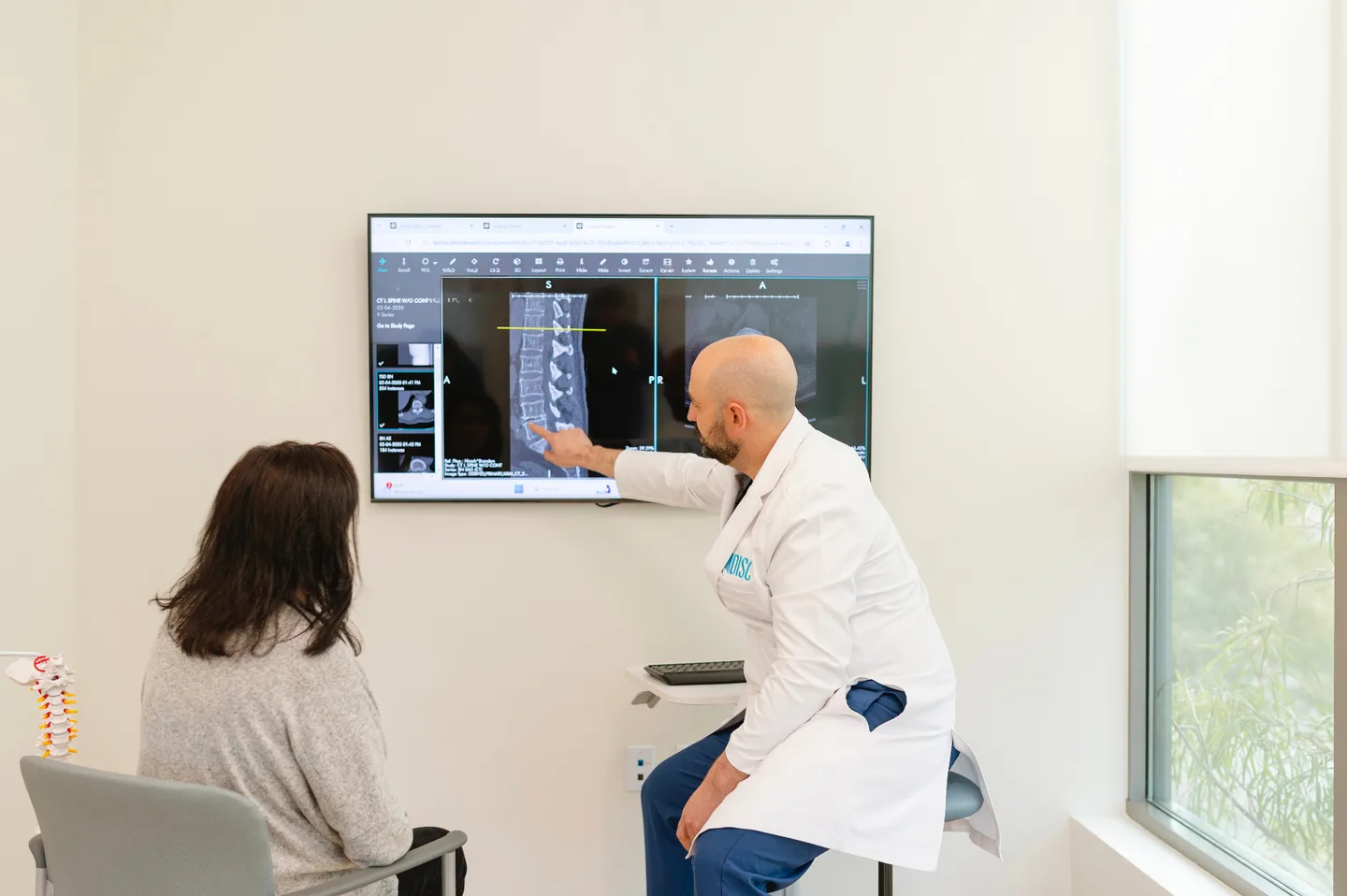
What ACDF Is.
ACDF, or anterior cervical discectomy and fusion, is one of the most established neck operations. Dr. Hirsch removes a worn or herniated disc through a small incision at the front of the neck and sets a spacer in its place, so the two vertebrae grow together into one segment.
Removing the disc takes pressure off a pinched nerve or the spinal cord, easing the arm pain, numbness, weakness, or changes in hand coordination and balance that bring most patients in.
Disc Replacement First, When It Fits.
When a cervical disc is worn or herniated, it can often be replaced with an artificial disc that keeps the level moving. Dr. Hirsch favors that when your anatomy allows, since it preserves the natural motion of your neck. Cervical disc replacement is his first choice for the right candidate.
ACDF is the proven option when disc replacement is not the right fit. It has one of the longest track records in spine surgery and remains a reliable way to restore stability once a disc is removed. Dr. Hirsch reviews your imaging and explains which approach suits your case.
A Muscle-Sparing Approach.
Dr. Hirsch reaches the spine through a short incision at the front of the neck, often placed in a natural skin crease where it heals to a fine line. Its length depends on how many levels are treated.
The muscles that move your neck are not cut. Dr. Hirsch works through a natural plane between them, moving them gently aside to reach the spine. Much of the quick recovery from an anterior approach comes from leaving those muscles intact.
How the Procedure Works.
The damaged disc is removed through the front of the neck, relieving pressure on the nerve or spinal cord. A spacer is placed where the disc was to restore height and hold the vertebrae in position. In most cases a small plate and screws support the segment while it heals. Over the following months the two vertebrae fuse into a single, stable unit. The procedure treats one or more levels, depending on where the compression is.
When Dr. Hirsch Recommends It.
ACDF is considered only after conservative care has not resolved the symptoms. Dr. Hirsch confirms the disc is the true source of the problem before recommending surgery.
What to Expect.
ACDF is often performed as an outpatient procedure, and many patients go home the same day. Most return to light activity within a week or two. Some notice a sore throat or mild difficulty swallowing in the first days, which usually settles on its own. Dr. Hirsch reviews activity, any bracing, and the fusion timeline with you before surgery.
Dr. Hirsch is board-certified and Yale-trained. Read his full background.